
Ready to prevent and cure infectious diseases
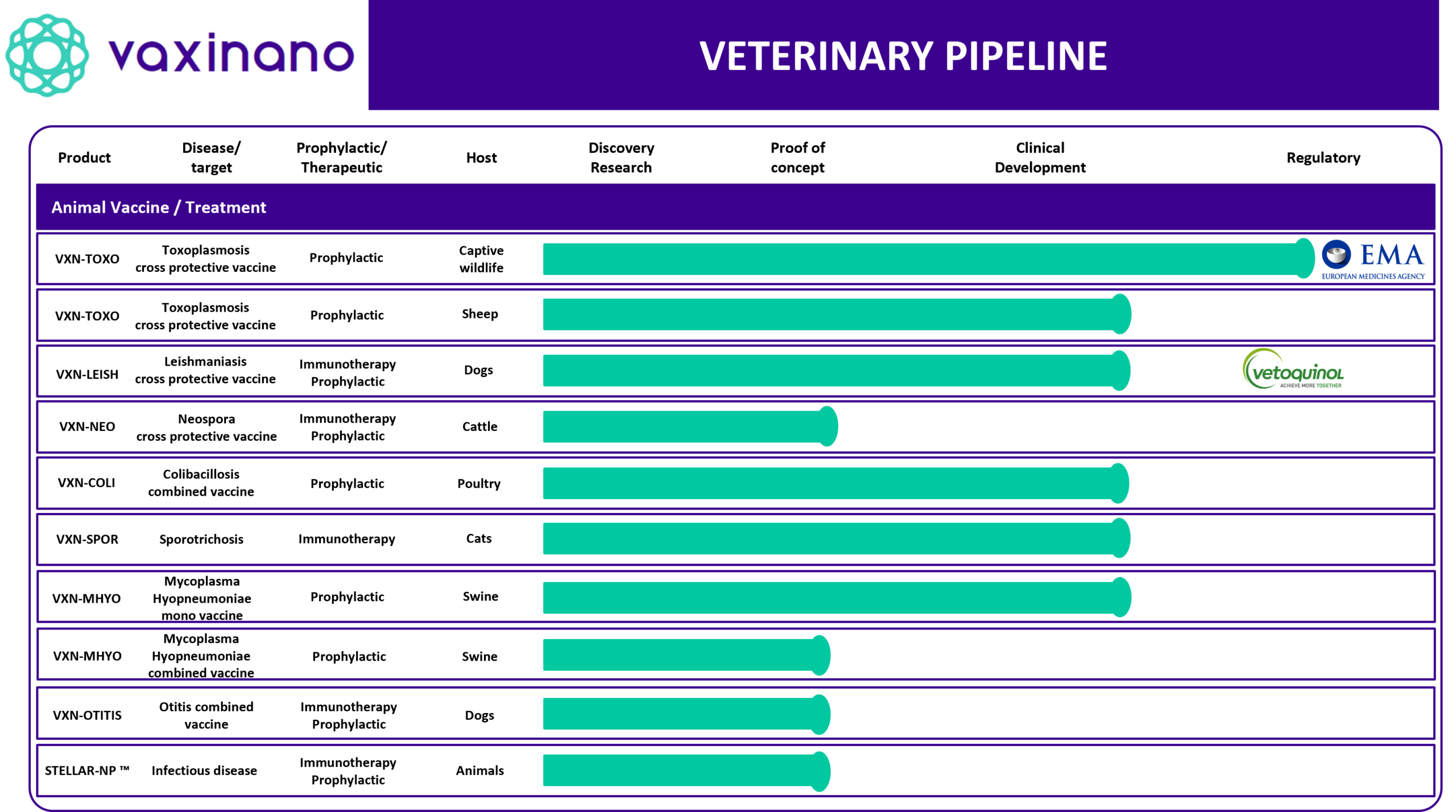
Toxoplasmosis is a widespread parasitic disease caused by Toxoplasma gondii, affecting many animal species worldwide. This parasite is lethal for large number of species such as primates, which most of them are endangered species. Felids are the definitive hosts of the parasite, playing a key role in its transmission cycle by spreading resistant forms (oocysts) into the environment. Toxoplasmosis is a major economic burden in livestock production, particularly in the ovine industry. It is a leading cause of abortion in ewes, resulting in significant reproductive losses and reduced flock productivity.
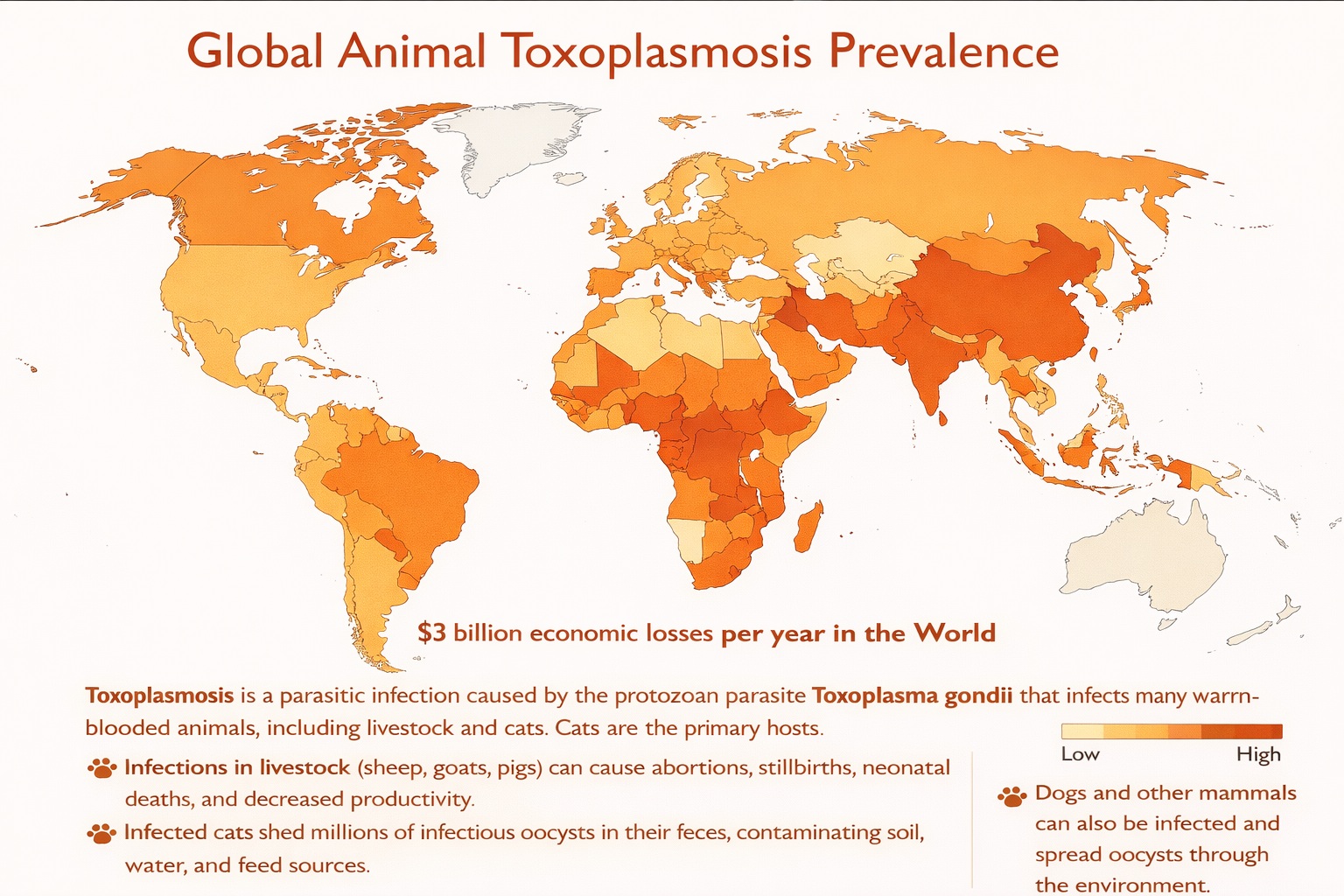
Congenital infections in livestock (especially sheep and goats) can lead to abortions, stillbirths, weak offspring, or neonatal death.
Reproductive disorders are the main clinical impact in farm animals, resulting in significant productivity losses. In young or immunocompromised animals, infection may cause neurological, respiratory, or systemic disease, which can be severe or fatal.
In companion animals, clinical cases are rare but may include neuromuscular signs or generalized illness. Toxoplasmosis is often fatal in many captive wild animal species that are particularly susceptible to infection, including primates and marsupials.
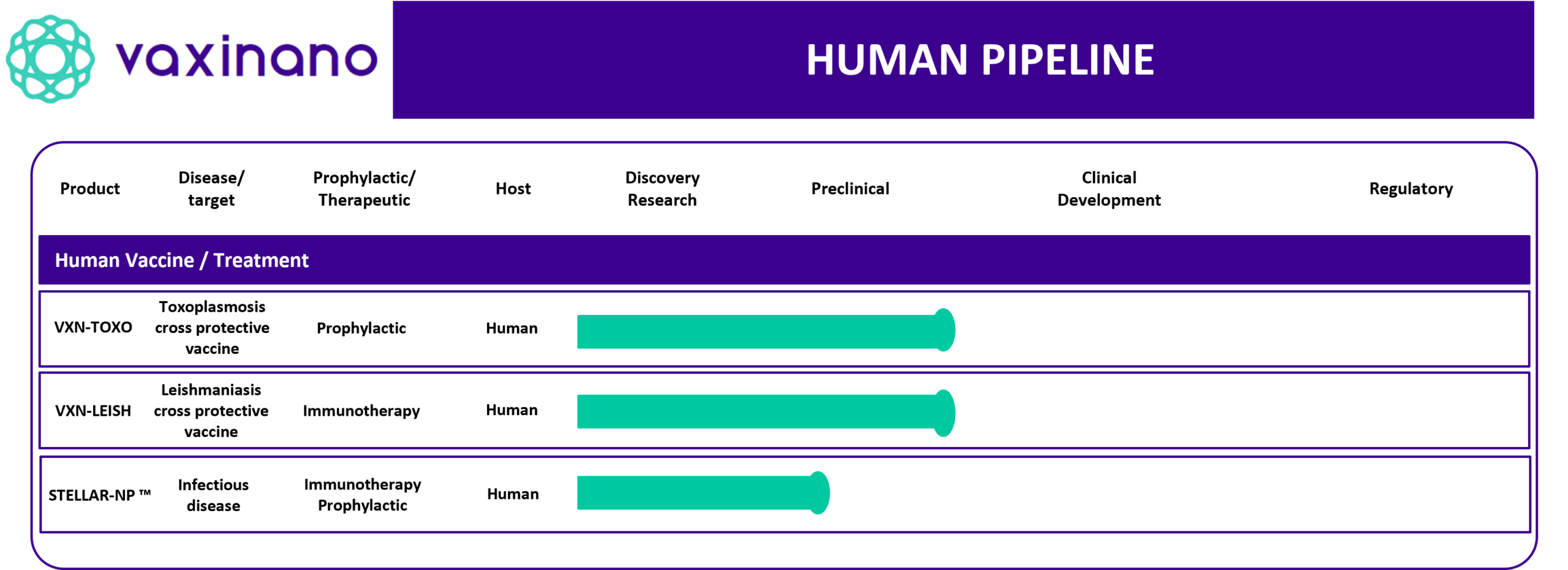
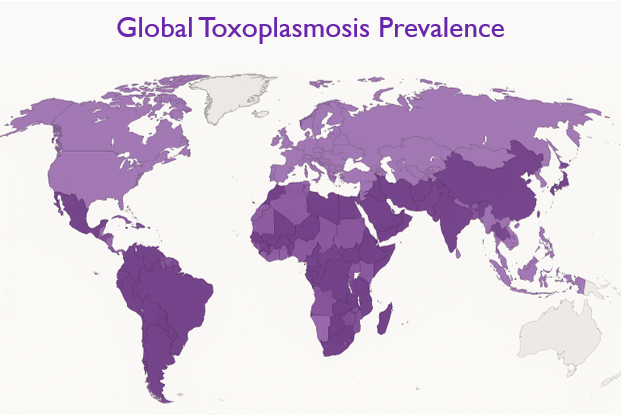
Toxoplasmosis in human is one of the most widespread parasitic infections globally, with around 30–50% of the world’s human population estimated to be seropositive (i.e. having been exposed). Humans become infected via ingestion of undercooked meat containing tissue cysts, contaminated water/soil with oocysts, or direct contact with cat feces. Transmission may also occur vertically, from a mother to foetus during an acute infection in pregnancy congenital toxoplasmosis). T. gondii cause life-threatening complications such as encephalitis, seizures, and multiorgan disease.

• Congenital infections can result in abortion or birth of disable children (neurological damage, vision loss).
• Ocular toxoplasmosis affects a subset of infected individuals: estimates symptomatic ocular disease in 6–18% of infected populations, and in congenital cases ~ 19% develop chorioretinitis despite early intervention. In South America, ocular involvement is more severe and may affect up to ~4% of the general population.
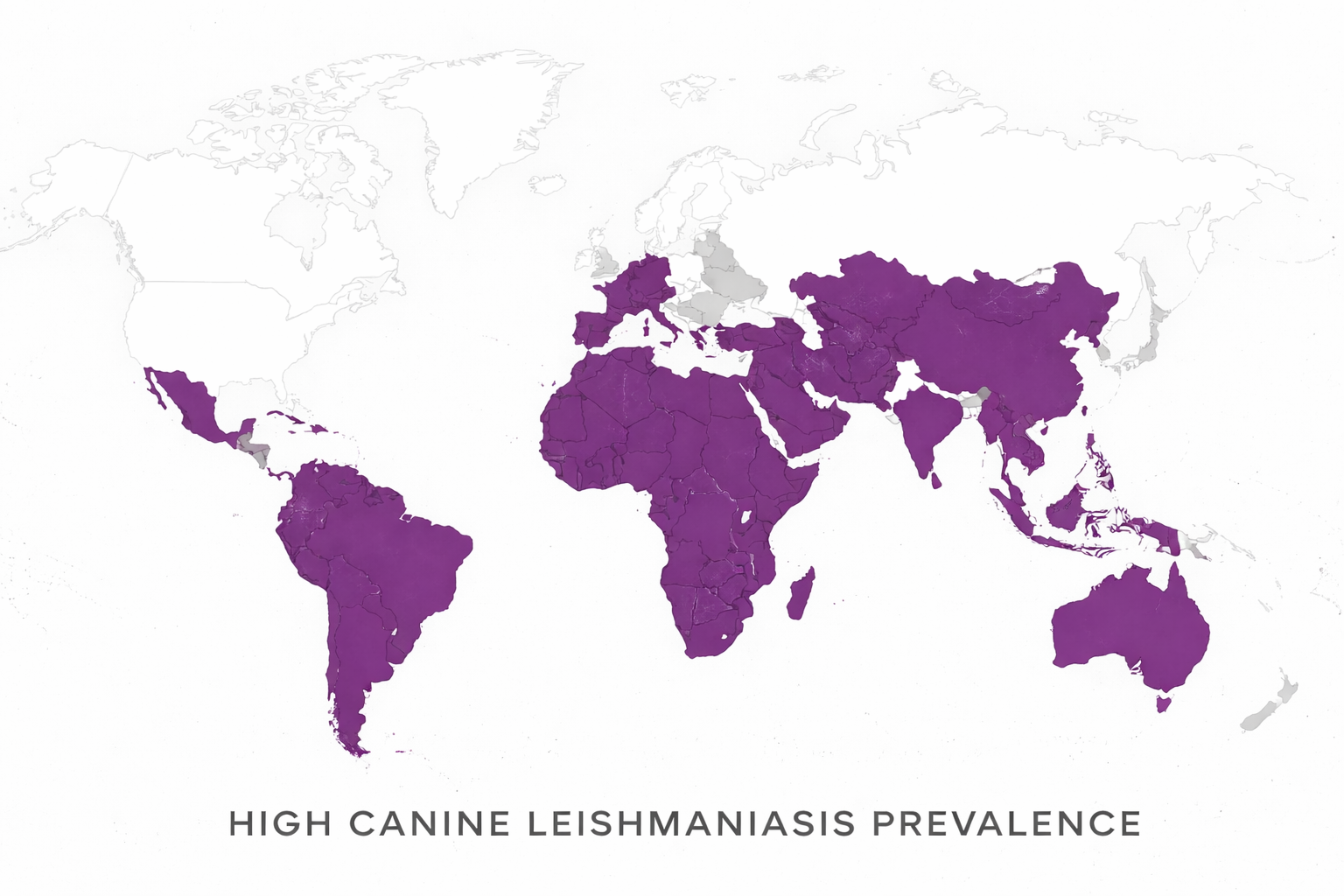
Canine leishmaniasis is a vector-borne parasitic disease mainly caused by Leishmania infantum and transmitted by infected female phlebotomine sandflies. It is endemic in tropical, subtropical, and Mediterranean regions and represents a major veterinary and public health concern, as dogs are the main domestic reservoir of human visceral leishmaniasis. Its geographic distribution is expanding, partly driven by global warming, which promotes the spread and establishment of sandfly vectors into previously non-endemic areas.
Canine leishmaniasis is widely distributed in Southern Europe, the Mediterranean basin, South America, the Middle East, and parts of Asia and Africa. The disease is typically chronic and progressive, ranging from asymptomatic infection to severe systemic illness. Common clinical signs include weight loss, lymphadenopathy, skin lesions, onychogryphosis, and ocular abnormalities, with possible involvement of the kidneys, liver, spleen, and bone marrow. Renal disease is a major complication and the leading cause of mortality in infected dogs. Although treatments can control clinical signs and reduce parasite burden, complete parasite clearance is rare, making prevention strategies such as vector control, vaccination, and early diagnosis essential in endemic areas. Improved vaccines and treatments are necessary.
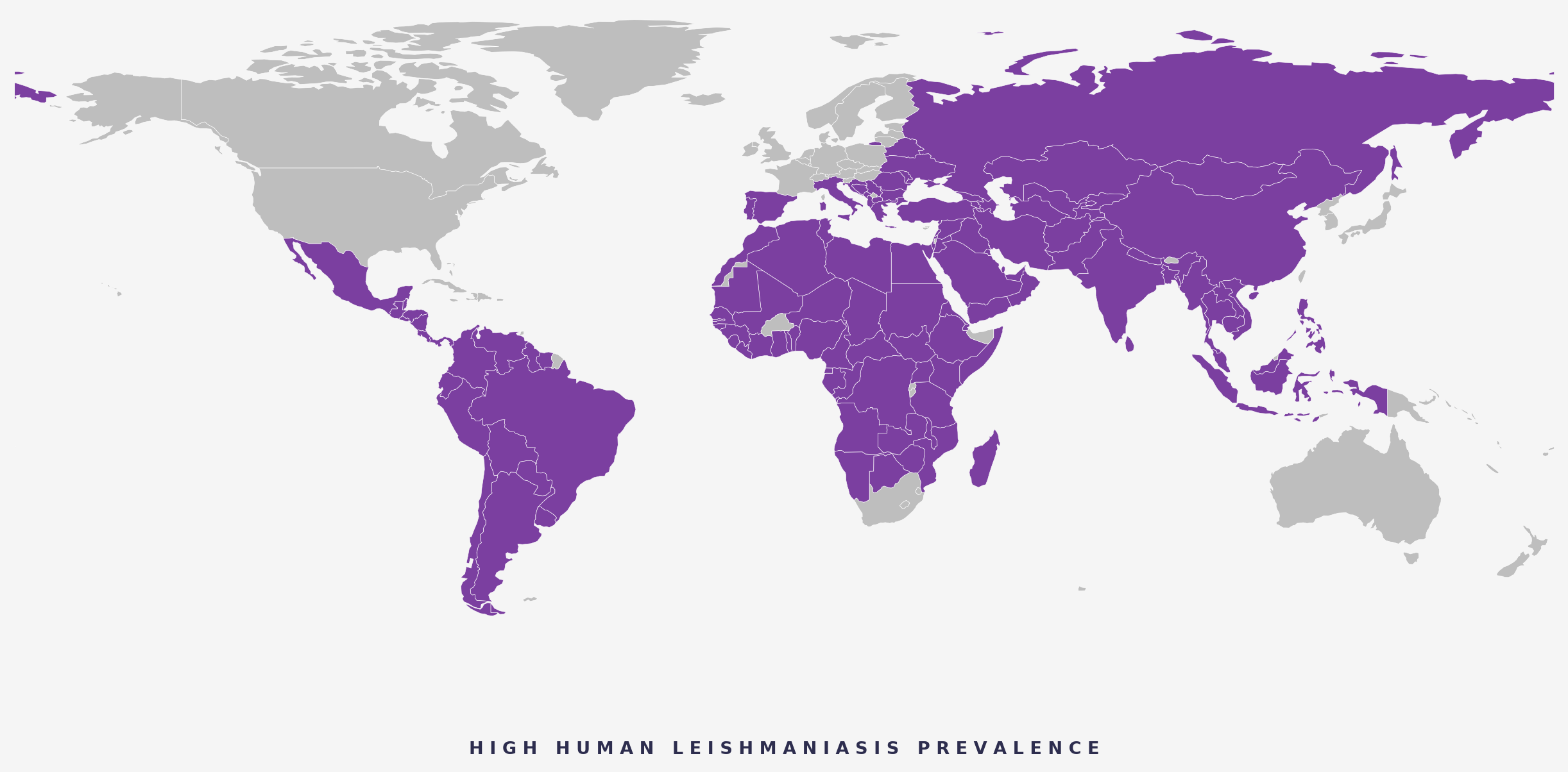
Human leishmaniasis is a vector-borne parasitic disease caused by protozoa of the genus Leishmania and transmitted by infected female phlebotomine sandflies. It is endemic in tropical, subtropical, and Mediterranean regions, affecting millions of people worldwide and representing a major neglected tropical disease.
Human leishmaniasis occurs in three main clinical forms: cutaneous, mucocutaneous, and visceral. Cutaneous leishmaniasis is the most common, causing ulcerative skin lesions that may lead to permanent scarring and accounting for approximately 600,000–1 million cases annually, mainly in the Middle East, North Africa, Central Asia, and Latin America. Mucocutaneous leishmaniasis is rarer and primarily reported in South America, where it causes destructive lesions of the mucous membranes. Visceral leishmaniasis (kala-azar) is the most severe form, affecting internal organs such as the spleen, liver, and bone marrow and causing 50,000–90,000 cases per year, mainly in India, Bangladesh, Nepal, Sudan, and Brazil.